May 6th, 2013 | categorizilation: all categories,Hokkaido (Japan),Japan,Post-2008
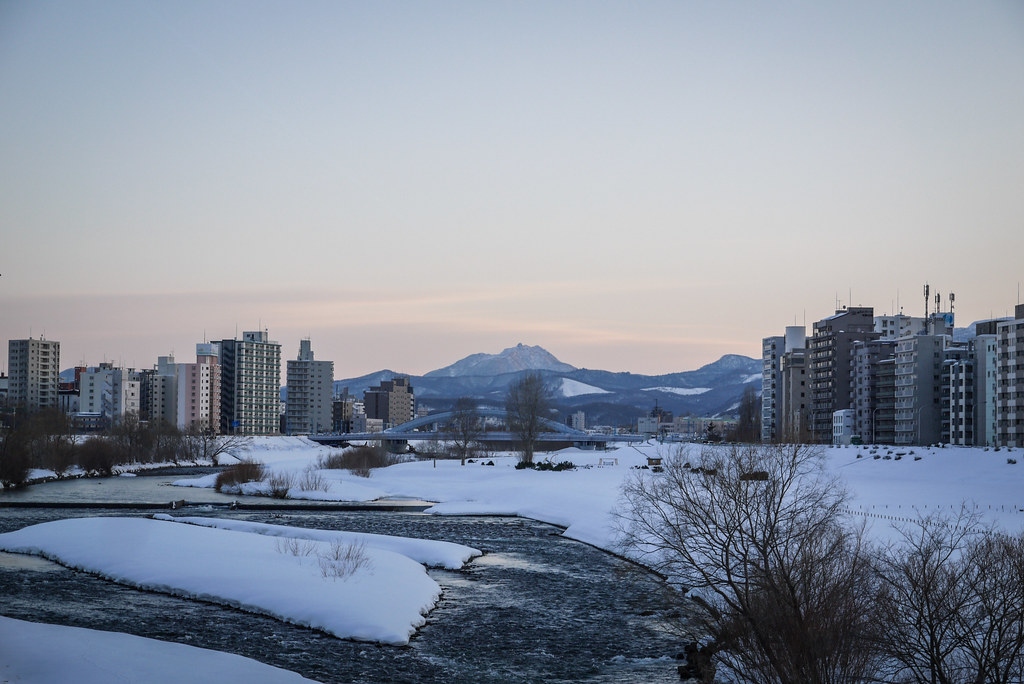
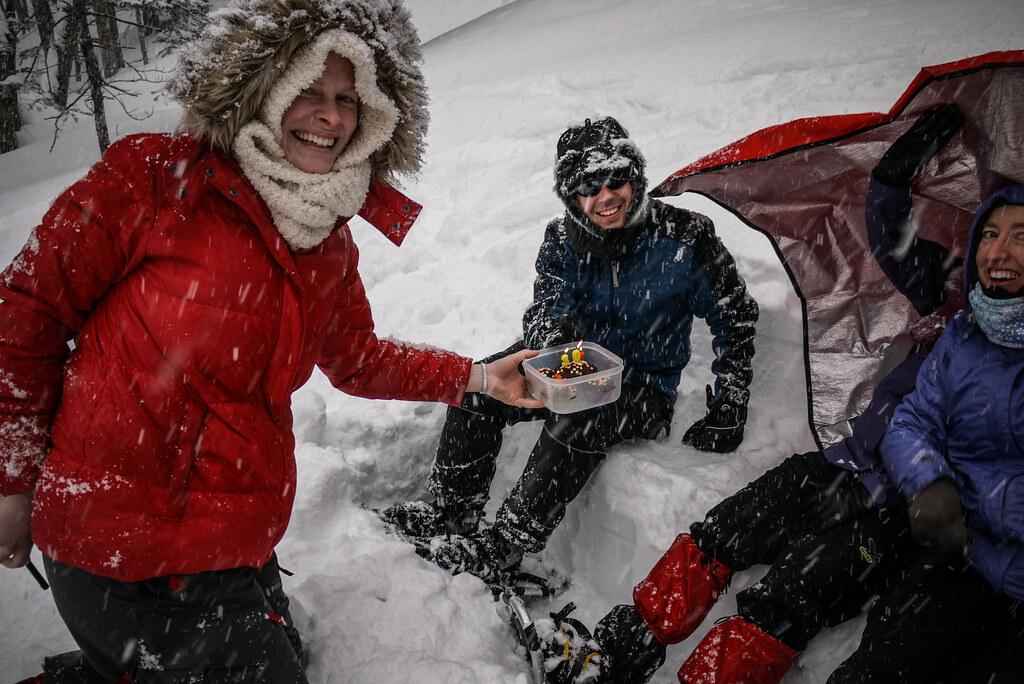
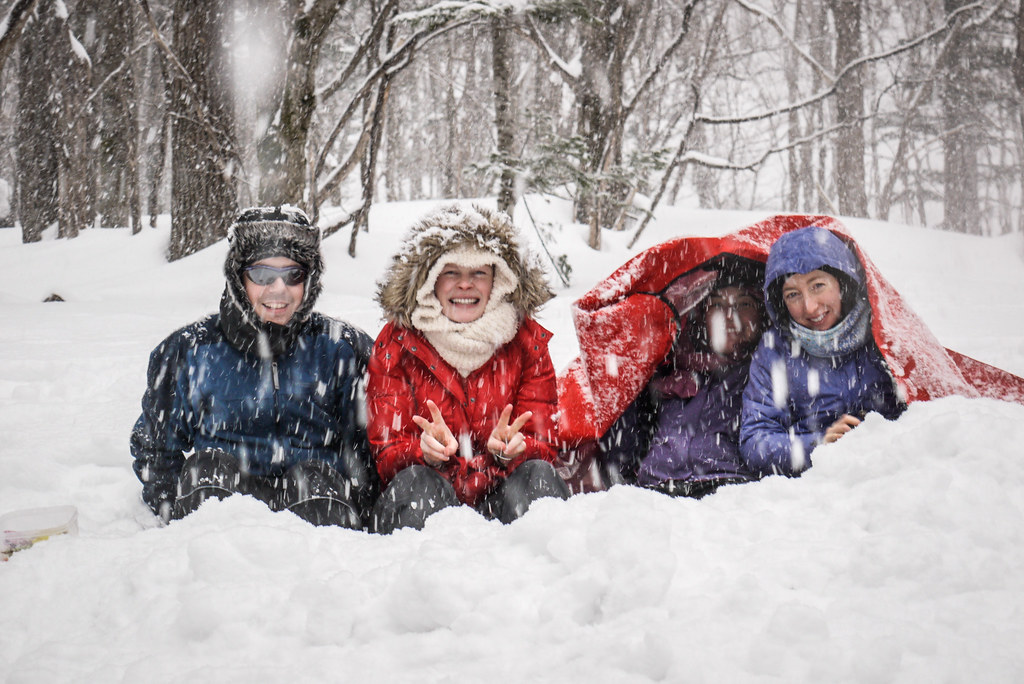
We woke today to rain. Harder rain than the previous days. Just as well today’s destination was back home to Sapporo.
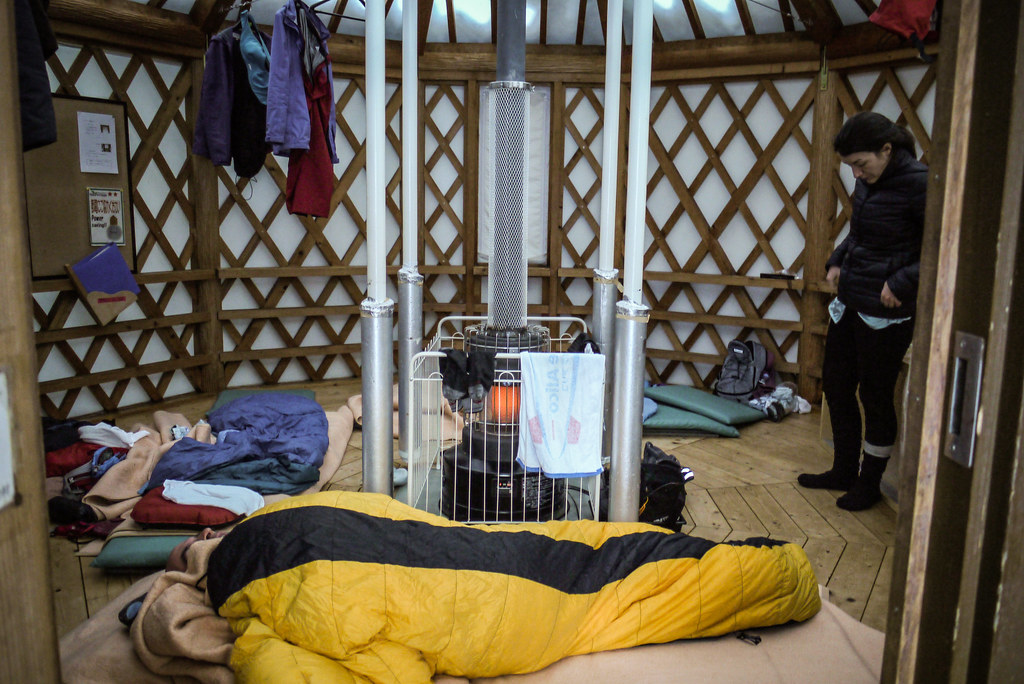
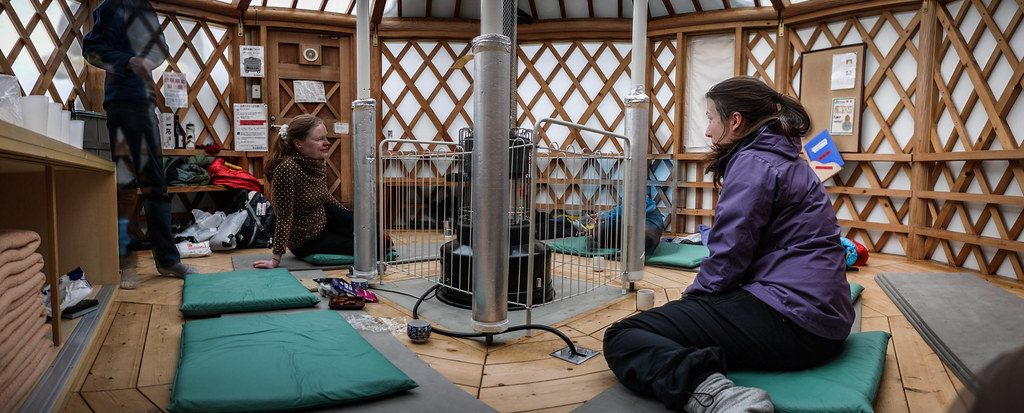
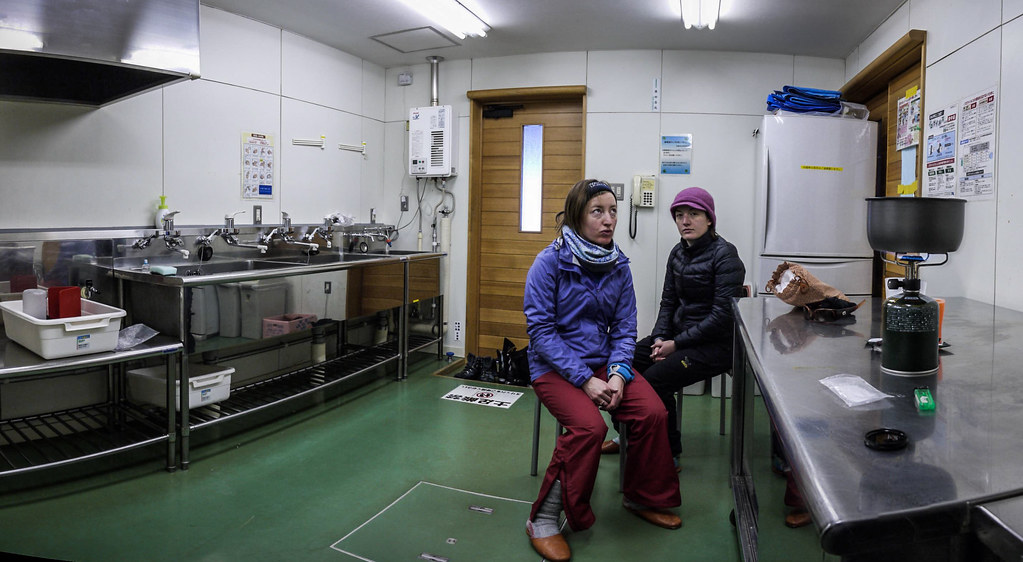
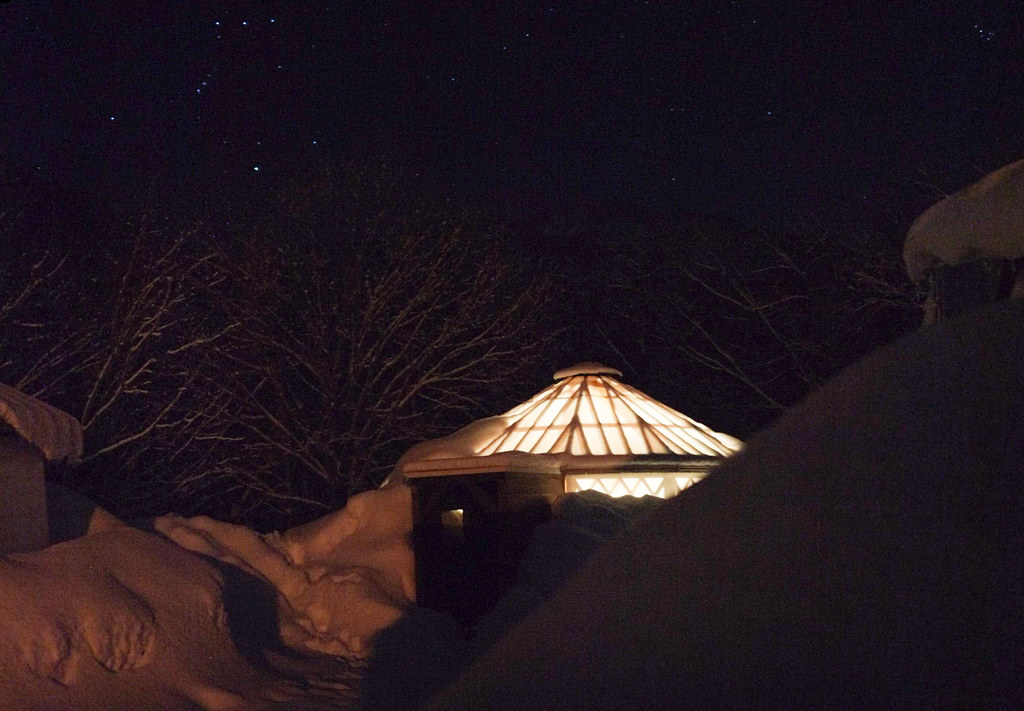
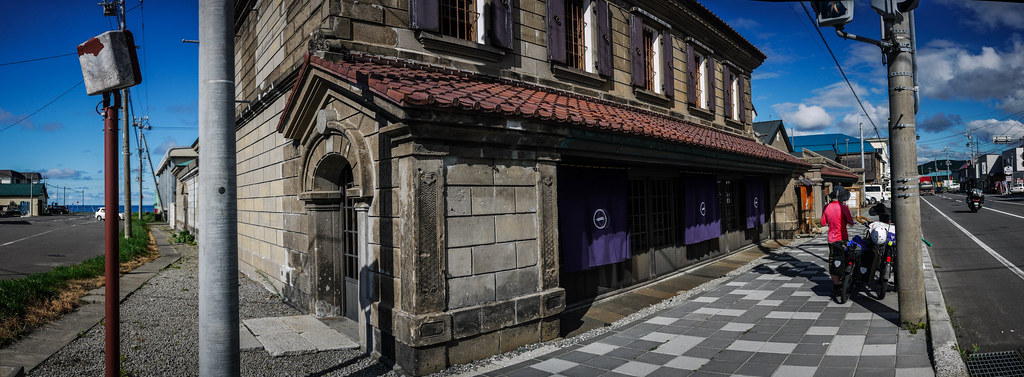
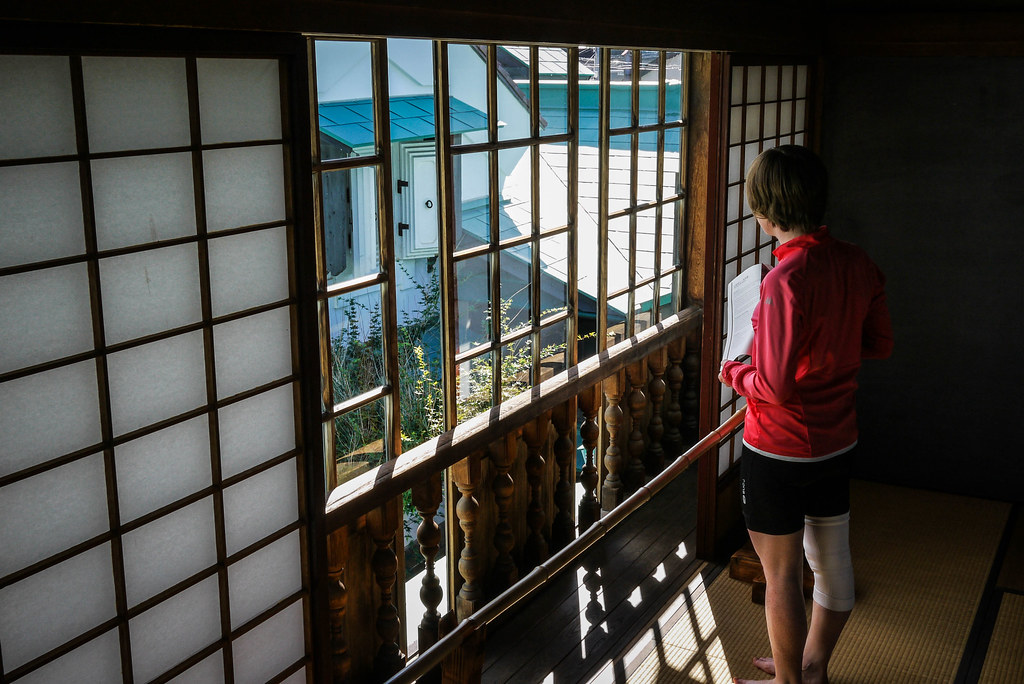
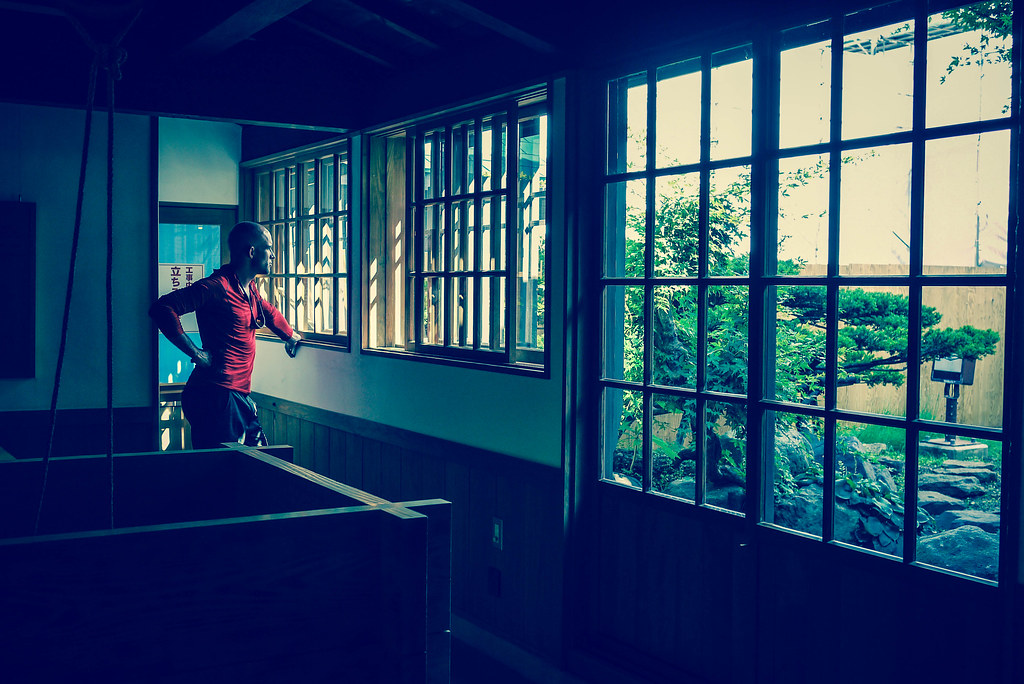
Just as well, also, that we had a spacious pagoda all to ourselves to keep out of the rain.
Of course the time came when we had to venture out. We were comforted by the fact that it was only 30km back to Sapporo.
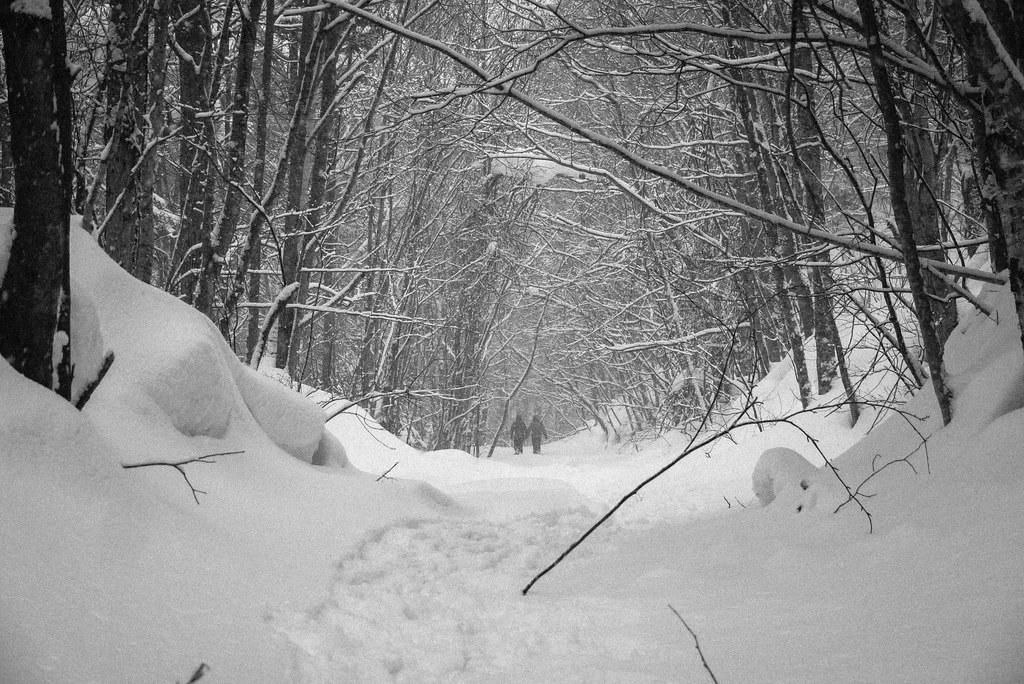
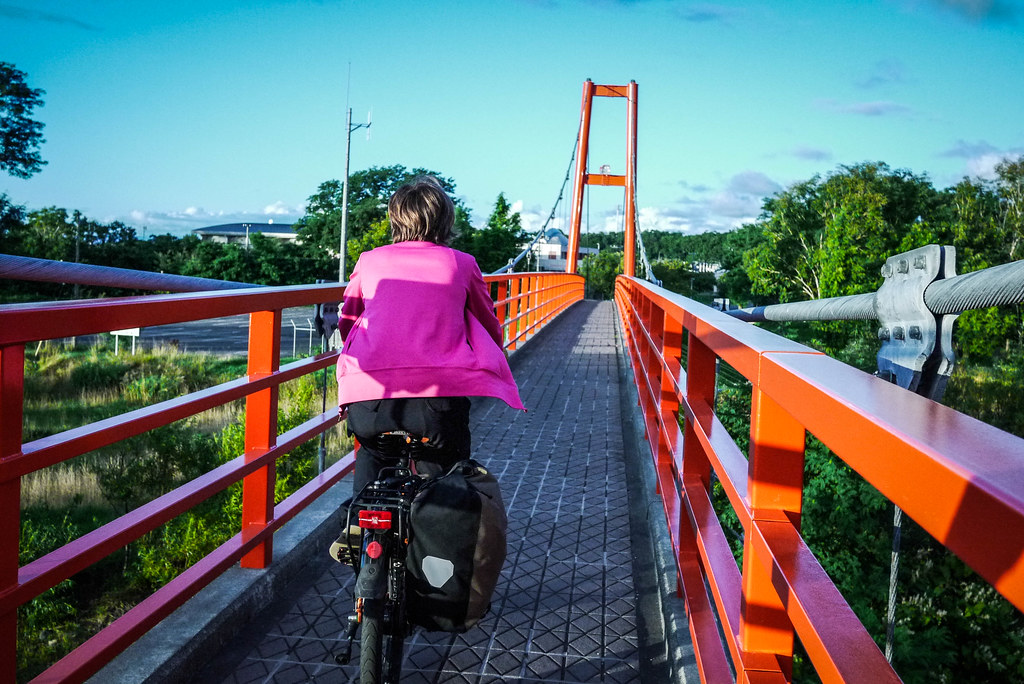
About half of that distance was covered on the fantastic cycling road that cuts through forest and urban sprawl into Sapporo, running from Kitahiroshima. On a nice day, it looks like this:Â http://www.14degrees.org/en/?p=1579.
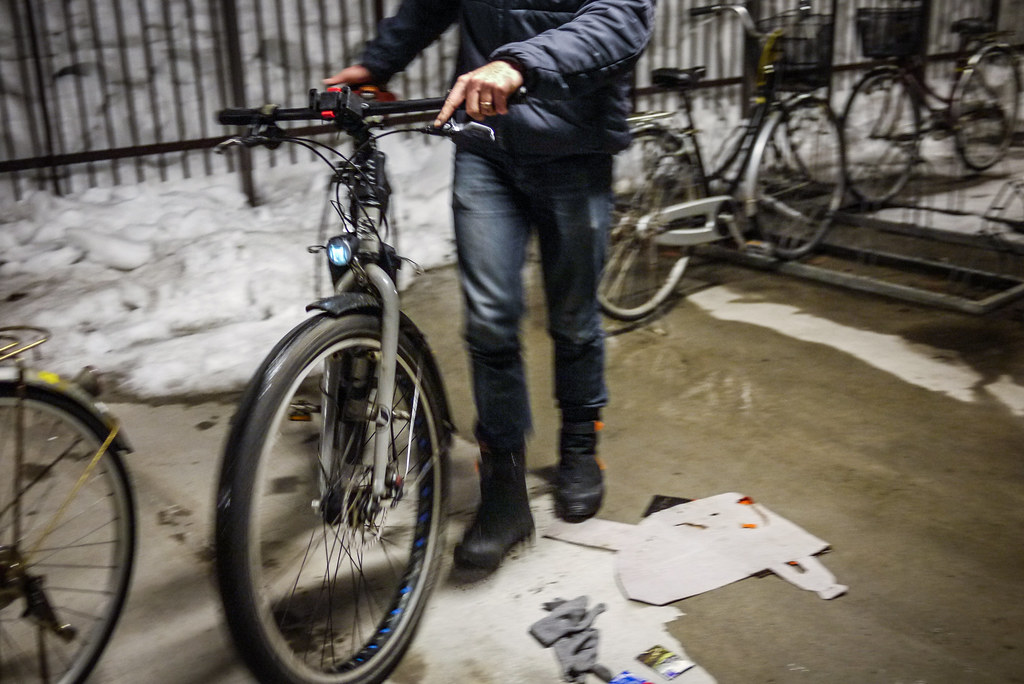
On a cold wet day, however, it looks more like this:
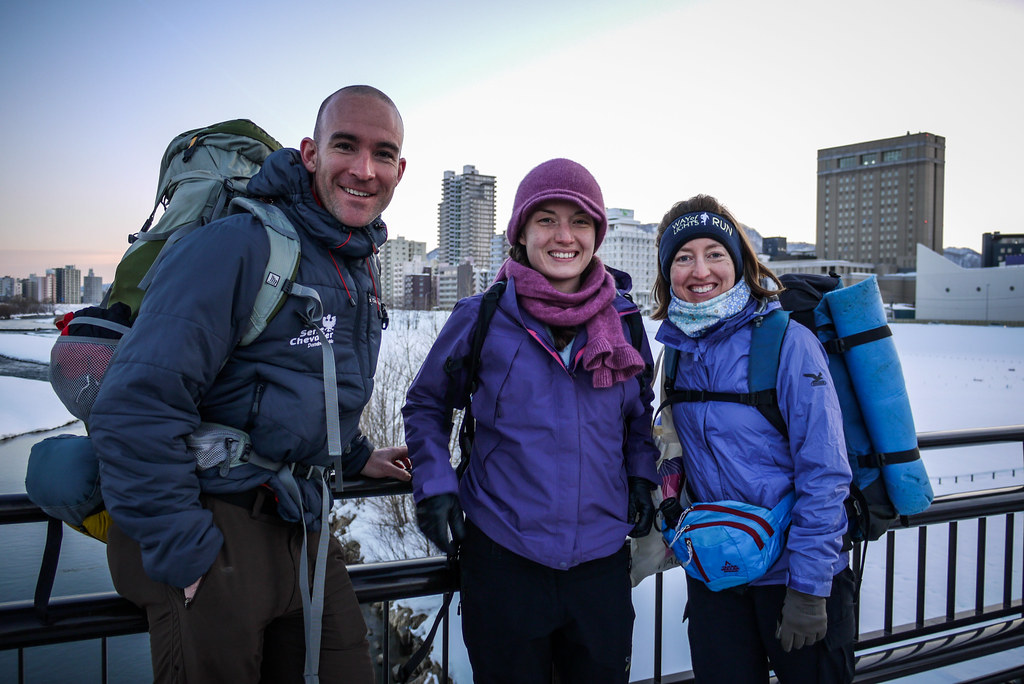
Safe and sound at home before 10am, after seeing our remaining companion off (Aki), we were happy to have the rest of the day at home to get laundry done and a wet tent aired and dried. Tomorrow it is back to work.
Despite the rain, it was great to get out and about for a well needed long weekend. The campsites we stayed at were great, considering the very close proximity of the hotsprings. Worth noting is that all the hotsprings had attached restaurants with very reasonable priced meals (between 600yen and 1200yen (US$6 to US$12)). We could have gotten away with not cooking any meals at all.
All up, we probably spent around 5,000yen (US$50) a day for the two of us (Haidee and Rob) for food, campground accommodation, and hotsprings. If it had been sunny, and hence had we been more motivated to cook more, it might have been slightly cheaper.
A big thanks for our fellow HIOC members Aki, Rick and Michal for the company!
Approximate route:Â http://goo.gl/maps/NzLUj
May 5th, 2013 | categorizilation: all categories,Hokkaido (Japan),Japan,Post-2008
Getting up before dawn is not always easy for those who do not usually get up before dawn. But is it even harder when ‘before dawn’ is 3:45am, as it is in Hokkaido even at this time of the year.
But before dawn it was this morning, as we hoped to see thousands of wild migratory geese take off for the day’s feeding from Miyajima-numa lake, in Tsukigata Town.
First up was a brisk 4km bike ride to the lake.
The more hardcore photographers were already there in force.
Right on 4:30am, the geese started moving. They took off from the water in flocks of hundreds.
The geese are protected, but apparently the local farmers are not thrilled about having thousands of hungry geese descending on their crops every day.
The early morning start did not dampen spirits on the cycling team.
Spirits were further heightened by the appearance of sunlight at the campground, a welcome change after two days of rain.
After another hearty breakfast, we departed camp and headed for the Ishikari River once again. The first 1km along the floodbank was paved, but this soon gave way to more dirt road.
Once again, no problem for fatter tires, but hard going on skinnies. We headed for the nearest quiet paved road, and were rewarded by great views to the mountains across the plains.
Rick, the Brit in the team, had managed to develop a sore knee during the three days’ riding, so opted out of the last night’s camp and headed straight back to Sapporo rather than carrying on with us. This meant that we were down to three.
Today’s lunch was by Google’s recommendation. On the Android smartphone app for Google Maps, you are able to tell Google to find nearest ramen restaurants. Today’s recommendation was Kirara Ramen in Nanporo. It was delicious. I got the ‘salt’ ramen with a free side of pork-on-rice. I paid 850yen for the feast (US$8.50)
I ought to mention that on this trip, I have been using a home-made (DIY) USB charger that I attach to my dynamo hub. I’ll be writing a blog post later about making one of these, but it works really well. I get about 1% battery charge per 1km cycled, when my Sony Xperia Z smartphone is switched off. Over a 60km cycling day, this is enough to keep the device charged, and turn it on every now and then to check location via GPS. The charger does not seem to put out enough charge, however, to keep the phone charged while the screen is on. Full write-up to come soon.
We cycled on to Naganuma Town, and checked into the Maoi Autocamp Campground. This relatively upmarket place cost us 1,200yen each (US$12). As routine on this trip dictated, we put up the tents and headed for an onsen, 3 minutes walk away. Dinner was convenience-store bought rice and veges and meat, cooked on our camp stoves.
Route/trip details
Sun 5th May |Â T
Distance: 60km
Approximate route: Â http://bit.ly/15oQGe5
After seeing the geese leaving at sunrise at Miyajima-numa, head back down the Ishikari River stopbank road, then onto the Yubari River cycling road at Ebetsu, end up at the Maoi Auto-land campground in Naganuma Town. Campground cost is 1000yen entry (includes Naganuma onsen pass), plus 500yen per tent site (up to two tents per site). The campground is near Higashi Teien (large Japanese garden).
Campground address: 夕張郡長沼町æ±ï¼—線北4(http://goo.gl/maps/3nSkw)
Campground TEL: 0123-88-0700
Campground URL:Â http://bit.ly/14y24nv
May 4th, 2013 | categorizilation: all categories,Hokkaido (Japan),Japan,Post-2008
Another perk of the Shinotsu Park Camping Ground is a free morning soak in the New Shinotsu Golf Course onsen. Nothing quite like a hot spring soak in the morning…
Post-soak and post-breakfast (porridge and apple for Haidee and I), we got on the road.
Michel, our Czech rider, was only able to stay for the one night, so headed back to Sapporo on his own. The remaining four of us carried on for a quick 20km to Tsukigata.
For some of the way, we had expansive blacktop on the top of the Ishikari River stopbanks.
The blacktop soon stopped, forcing an impromptu clamber over gates to get access to a nearby road.
Rice is an important staple here…although I can imagine the local variety must be quite hardy, to cope with a mild and rather short growing season…it is May here and there’s still snow on the ground.
The big idea behind coming to Tsukigata early, and making it a short day, was so that we could go and have a look at Miyajima-numa, a popular stop-over for migrating geese. By the time we got to the campground at Tsukigata (a very palatable 200yen (US$2) each a night) and got our tents set up, it had started raining again. The short 3km cycle to Miyajima-numa was scrapped, and we headed to the nearest onsen. Which would be our second hot-spring soak in about 6 hours. Tough work.
The Tsukigata Kairaku Campground has a great BBQ area. So we decided to eschew our camp cookers and go all out. Grilled meat and veges over a charcoal BBQ was the feast for the night. Warming and fun. Charcoal, meat and veges bought from the local farmer’s coop supermarket.
Route/Travel Details
Sat 4th May |Â Shinotsu Park Camping Ground to Tsukigata Kairaku Park Campground
Distance: 21km
Approximate route: http://goo.gl/maps/QpbGk
Lake Shinotsu to Tsukigata (near Bibai City) 21km along Ishikari river stopbank road. If the weather is good, cycle around Miyajima-numa, a migration point for wild geese and other birds. Camp at the Tukigata Kairaku Park Campground (月形皆楽公園ã‚ãƒ£ãƒ³ãƒ—å ´, 200yen per person per night). Campground is right next to Tsukigata Yurikago Onsen (月形温泉ゆりã‹ã”, 500yen).
Campground address: 樺戸郡月形町皆楽公園内(http://goo.gl/maps/yZyGg)
TEL: 0126-53-2577
Campground URL:Â http://bit.ly/14y1NB5
May 3rd, 2013 | categorizilation: all categories,Hokkaido (Japan),Japan,Post-2008
The first week of May in Japan is fantastic. Four national holidays converge upon one week, meaning that if you play your cards right, you can get up to a week off work. Aptly, the week is referred to as Golden Week, or GW for short. While Golden Week in other parts of Japan might mean blossom viewing in warm spring weather, Golden Week in Hokkaido is still cold. Like snow-still-on-the-ground cold. But if the skies are clear, it can be a great opportunity to get outside. So, we (my wife and I) planned to get outside.
A four-day cycle tour around some campsites and onsen (hotsprings) within a 60km radius of Sapporo City, following some of the area’s main rivers (Toyohira River, Ishikari River, Yubari River), to be exact.
We invited members of the Hokkaido International Outdoor club to come along. Â Three hardy souls responded. A Brit, a Czech, and a Japanese.
It essentially proceeded to rain for the next 96 hours straight. The only respite was a period of approximately 10 hours where the sun appeared for approximately 32 minutes.
I may be exaggerating slightly, but I think the other members will agree that it’s not too far off the truth.
We started in Sapporo at 11am on Friday the 3rd of May, aiming for the Shinotsu Park Camping Ground in Shinshinotsu. The aim was to try to keep to the Toyohira River and Ishikari River cycling paths as much as possible. It was raining when we left.
But the team was in good spirits.
Ganbare Nihon! (Let’s go Japan!)
For the most part along the Toyohira River, there was either a cycling path alongside the river, or a paved river access road on the top of the floodbanks (non-accessible by car).
Once onto the Ishikari River floodbanks, however, the paved roads gave way to gravel. These would be fantastic for a group on wide-tired touring bikes, but for the three on narrow road tires, the going was tough.
Travelling-by-floodbank meant no automobile traffic, but it also meant limited access to places to get a warm meal. For lunch on this first day, we consulted Professor Google, and she guided us to a cheap local restaurant on the other side of the river. The Emergency Center on the Ishikari River in Ebetsu was a very welcome respite from the cold weather for five hungry cyclists. Here, we ate our fill of curry-rice or ramen or soba noodles for around 600yen each (US$6). The small restaurant had their heaters cranking, and we all managed to get some of our wet jackets dried out while we were there.
Hitting the road again after a warm lunch, we had to steer clear of the river floodbanks, due to the gravel roads.
After a cold wet 50km, we arrived at our campsite at around 3pm. The camp registration lady told us we were their first campers for the season. Aki, our sole Japanese member on the trip, was not surprised. The campground, for the most part, was a soggy marsh. Piles of unmelted snow loomed in the background.
The big drawcard for this campground was that it is about 1 minute’s walk from two separate onsen (hot-springs). We each paid 800yen (US$8) per night for the campground, and 300yen (US$3) for a fantastic soak in natural hot spring baths. A little pricey as far as campgrounds go, but the cheap onsen made up for it. Dinner was had at the onsen restaurant, because none of us could be bothered cooking in the cold wind outside. At around 800yen (US$8) each for the meals, it hardly broke the bank.
Route/Travel Details
Fri 3rd May: Â Sapporo to Shinotsu Park Camping Ground
Distance: 45km
Approximate Route:Â http://goo.gl/maps/cKdf5
45km along the Toyohira River Cycle Path and then the Ishikari River Cycle Path/stop-bank road. The campground is right next to Airis Onsen(アイリス温泉, costs 400円)and Shinotsu Lake(ã—ã®ã¤æ¹– ). Campground opens 1st May, and costs 300yen per person per night, plus 1000yen per tent (second tent is 500yen).
Campground Address: 日本北海é“çŸ³ç‹©éƒ¡æ–°ç¯ æ´¥æ‘第46線å—3
Campground TEL: 0126-58-3508
Campground URL:Â http://bit.ly/1662TUB
January 6th, 2013 | categorizilation: all categories,Japan,Post-2008
As many readers will know, I live in Sapporo, Japan, with my wife Haidee. You’ll probably also be aware that I’m a fan of human powered transport. Haidee is also, and we cycle most places around town here. In winter, this becomes quite the challenge.
While I am riding a Surly Karate Monkey mountain bike with massive wide tires, which make short work of ruts and mush and ice…
Haidee has had to make do with her Trek FX7.5 WSD hybrid bike, whose skinny tires are really quite the challenge.
The Trek is an awesome summer bike; it is light weight, quick, and does a great job at cycle touring. But despite Haidee’s efforts at making it work as a winter bike, it has proven to be a lot of hard work for her, and for me (having to stop and wait often for her to push the bike over icy obstacles and through deeper patches of snow). What I wanted, was her to be on a bike that would make cycling in the snow fun for her and for me cycling with her. And this required wide tires, something that the Trek just wouldn’t take.
So yes, out of my selfish desire, I set about building her a new bike which would handle the Sapporo winter better. The reason I wanted to build the bike myself was because I wanted the bike to have nice fat 47mm wide rims, in order to make wide tires as stable as possible at low pressures (better stability in soft snow). A touring/MTB-oriented bike with stock rims of that width are not common at all.
The frame requirements were as follows:
There are plenty of complete bikes on the market which fit this criteria (see http://www.balloonbikes.com/en/bikes-en.html). However, companies which offer just framesets like this are as scarce as hen’s teeth. The only companies I could find offering low standover extra-small wide tire clearance framesets were Storck Bicycles (Germany) with their Multitask Comfort, and Maxx Bikes (also Germany) with their Pacemaxx Comfort. There were others, including some amazing looking mixte/stepthrough carbon frames from China (like the ones here), but none that had the extra small frame sizes I needed.
In the end, we bought the Pacemaxx Comfort, simply due to the ease with which I could order the frame and parts. Using Maxx Bikes’ ‘configurator’, you can choose color and essential parts you want; I ordered the frame with bottom bracket and headset installed. The real clincher was that because I was going to be in the Czech Republic for a conference, I was able to have the frame sent to Prague (from Germany) for 12 Euro rather than the 250 Euro it would have cost to have it sent to Japan. Taking the boxed up frame back to Japan on the plane (Lufthansa and ANA) was no extra charge. The time from order to shipping, including a custom powder coating job, was something like 3 or 4 days (with numerous on-the-ball emails with Maxx Bike representative Uwe Matthies).
Once home in Japan, the building began. The parts list runs something like this:
The 38-tooth chainring paired with a 22-tooth cog on the Alfine 8-speed gives 24-74 gear-inches, according to Sheldon Brown (for 26 X 2.35 / 60-559 / MTB tire with 170 mm cranks). This is just about right for Haidee, who is not much of a speed-demon…
| Low | - | - | - | - | - | - | High | ||||||||
|---|---|---|---|---|---|---|---|---|---|---|---|---|---|---|---|
|
|
|
|
|
|
|
|
The build was fairly straight forward, with the main peculiarity of the frame being that Avid BB7 brakes set at a 140mm rotor position wouldn’t fit in the rear triangle; the lever-arm would ‘foul’ the seat-stay.
Astute readers will notice that the adapter is back-to-front, but turning the adapter around just makes things worse. On the left is where the lever-arm is supposed to rest, and on the right is the extent to which the calipers don’t fit. Avid BB7 calipers come in two different versions, however: the Mountain (above) and Road. The Road version has a shorter pull, so the lever-arm is always in a position similar to the above ‘fouled’ MTN version. So I ordered a BB7 Road caliper for the back. This helped to some extent, but the lever-arm still fouled the seat-stay. In the end, I tried both the 140mm rotor adapter and the 160mm adapter, but ended up having to go up to 180mm, which pushes the whole caliper back and down. Problem solved. Gobs of room for the lever-arm, and gobs of stopping power on tap (which, admittedly, for Haidee’s svelte frame, is entirely overkill).
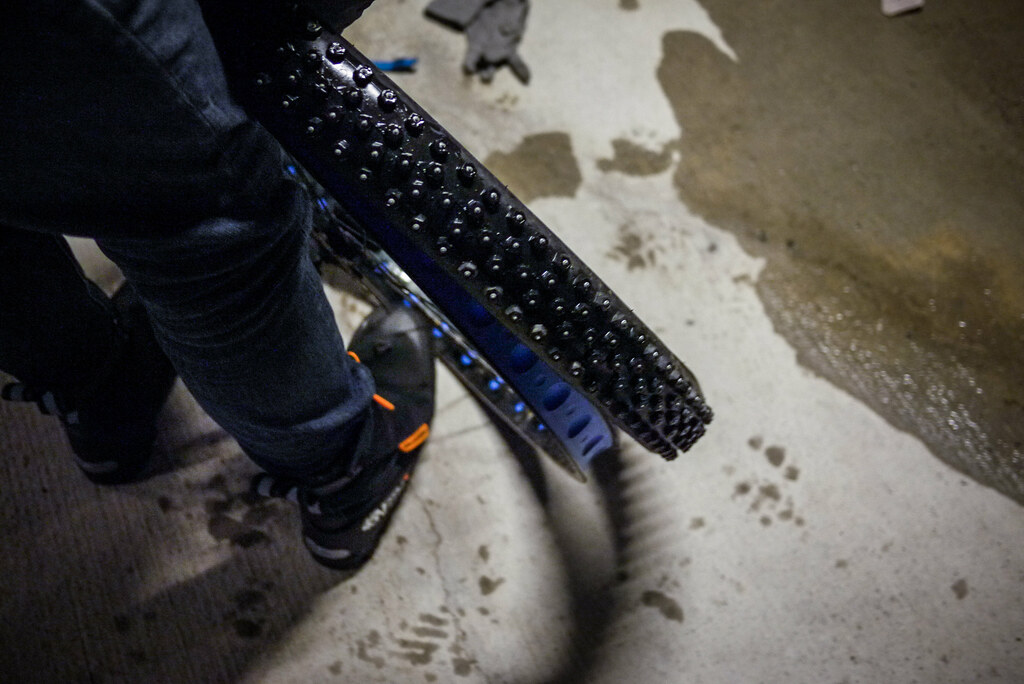
Another challenge, unrelated to the frame, was fitting the Schwalbe Ice Spiker Pro tires (kevlar bead) onto the Northpaw-S rims. Getting the bead seated was a mission. It is a very tight fit; getting the tire onto the rim is no problem (it can be done by hand), but getting the bead to pop into the clinch all the way around the tire required some tire lubricant (I used Schwalbe Easy Fit) and pumping the tires up to the max pressure (the tires popped in for me at 45PSI), and leaving them overnight at that pressure. They have now been at around 10-15PSI for a couple of days on the bike, and the bead is staying put (thanks to Greg Smith of Schlick Cycles for the advice).
Overall, the bike-build went really well, the minor frustration with the brakes notwithstanding. The real joy is seeing the difference it has made to Haidee’s confidence on the snow and ice and ruts and bumps of the Sapporo winter cityscape. On my own bike, I found the difference going from 27mm wide rims to 47mm wide rims (both with 2.25inch wide tires) like night and way in terms of stability, and it seems like Haidee is finding the same. Smiles all around.
It deserves to be said that the Pacemaxx Comfort frame really is a great frame; there are braze-ons for all manner of drivetrain setups (including cable-routing lugs for Rohloff hub cables), and even small details such as the rack mounting bolt hole being a hefty 6mm diameter rather than the usual 5mm (requiring some modification of Haidee’s Bontrager rack), really speaks to its design as a MTB-touring frame. Direct mounting for the kickstand, and the eccentric bottom bracket – just fantastic.
November 17th, 2012 | categorizilation: all categories,highlights,Post-2008
It is my pleasure to announce that by all appearances, Marcelo Gervasio Silva of Rio de Janeiro, Brazil, has unofficially broken my world record for the longest journey by skateboard. Apparently he started his journey in French Guiana on the 26th of January 2011, and has to this date skated over 23,000km around Brazil and Southern South America (Uruguay, Argentina, and Chile). Read on to find out how you could help Marcelo get the recognition he deserves.
Details about the journey are a little scant (mainly because I don’t understand Portuguese), but from what I’ve seen on his Facebook page, the journey has been epic, especially this past southern-hemisphere winter, as he skated through Uruguai, Argentina, and Chile.
 (Photos via Marcelo on Facebook)
His documentation of the journey has been, however, by all appearances, immaculate. Photos of all kilometer markers he passes (https://www.facebook.com/marcelopedalverde/photos_stream), 200 hours plus of video footage, and plenty of diary entries. Some of his videos, including television interviews, are here:Â https://www.youtube.com/user/Marcelopedalverde?feature=watch
I’ve had a few emails back and forth between Marcelo and I, and he tells me that the journey has a couple of motivations. He says the journey is, first and foremost, in memory of his father, who passed away in 2004. While this is the biggest motivation, he also wants to see skateboarding be promoted as a healthy past-time for kids in Brazil.  He is a passionate activist for getting kids off the streets and into life-affirming physical activity. And skateparks are a big part of this (he’s been a skateboarder since 1967). Along the way on his journey, he’s been meeting with politicians, and trying to raise the profile of skateboarding as a sport in Brazil. I really hope that the exposure he could get from his epic world-record-breaking journey will help with this.
When I said to Marcelo that he should apply to Guinness for the world record, he said that it is not so much for the record, but to honor his father that he is doing the journey. I have contacted Guinness myself anyway, and hopefully they will get onto “officializing” this journey. The process for applying for and validating a record is pretty daunting (http://www.14degrees.org/en/?page_id=715), but it looks like Marcelo should have enough evidence to make a claim. If you want to help Marcelo along in this respect, you could contact Guinness World Records yourself, and encourage them to follow up on this amazing journey. Email me at rob.thomson@14degrees.org, and I will forward you on the contact details of a few people in Guinness in London who you can contact.
Apparently he is currently working on a book and a film about his journey. I look forward to seeing them!
September 4th, 2012 | categorizilation: all categories,Japan,Post-2008
シマノã®8段内装ギアã€ã‚¢ãƒ«ãƒ•ィーãƒã¯ã€æ‰‹å…¥ã‚ŒãŒã»ã¼å¿…è¦ã¨ã—ãªã„ãƒãƒ–ã®ä¸€ã¤ã§ã™ã€‚ãƒãƒ–ã®ä¸¡å´ã®ã‚·ãƒ¼ãƒ«ãŒéžå¸¸ã«ä¸ˆå¤«ã§ã€ã‚·ãƒ¼ãƒ«ãŒã¡ã‚ƒã‚“ã¨ç· ã‚ã¦ã„ã‚‹é™ã‚Šã¯ã€æ°´ã‚„誇りãªã©ãŒãƒãƒ–ã®å†…å´ã«å…¥ã‚‹ã“ã¨ã¯è€ƒãˆã‚‰ã‚Œã¾ã›ã‚“。ã—ã‹ã—ã€æ•°ãƒ¶æœˆå‰ã«ã€è‡ªåˆ†ã®ã‚¢ãƒ«ãƒ•ィーãƒãƒãƒ–ã®ãƒãƒ¼ã‚¿ãƒ¼å´ã®ãƒ™ã‚¢ãƒªãƒ³ã‚°ã‚³ãƒ¼ãƒ³ãŒã‚†ã‚‹ã„ã“ã¨ã«æ°—ã¥ãã€ã™ãã«ç· ã‚ãŸãŒã€æ°—ã¥ãã¾ã§æ•°æ—¥ãŸã¡ã¾ã—ãŸã®ã§ã€ãã®é–“ã«æ°´ãŒãƒãƒ–ã«æµ¸å…¥ã—ãŸã‚ˆã†ã§ã™ã€‚æ°´ãŒå…¥ã£ãŸã“ã¨ãŒåˆ†ã‹ã£ãŸã®ã¯ã€ãƒãƒ–ã¯é€šå¸¸ã‚ˆã‚Šæ‘©æ“¦ãŒå¤šã‹ã£ãŸã‹ã‚‰ã§ã™ã€‚ã¤ã¾ã‚Šã€é€šå¸¸ã€è‡ªè»¢è»Šã‚’上ã’ã¦ã€ãƒšãƒ€ãƒ«ã‚’逆方å‘ã«å›žã™ã¨ãã«å¾Œã‚ã®ãƒ›ã‚¤ãƒ¼ãƒ«ã¯è‹¥å¹²å¾Œã‚ã«å›žã‚‹ãŒã€é€šå¸¸ã‚ˆã‚Šã‚‚ホイールãŒå›žã‚‹ã‚ˆã†ã«ãªã£ã¦ã„ãŸã—ã€ãƒ›ã‚¤ãƒ¼ãƒ«ã‚’ã¨ã‚ã¦ãƒšãƒ€ãƒ«ã‚’回ã™ã¨ã€é–“æ¬ çš„ã«æ‘©æ“¦ãŒå¤šããªã£ãŸã‚Šã€å°‘ãªã‹ã£ãŸã‚Šã—ã¦ã„ã¾ã—ãŸã€‚ã“ã®ã“ã¨ã‹ã‚‰ã€ã©ã†ã‚‚内å´ã«ç•°å¸¸ãŒã‚ã‚‹ã¨åˆ¤æ–ã—ã€åˆ†è§£ã™ã‚‹ã“ã¨ã«ã—ã¾ã—ãŸã€‚
今回ã®ä½œæ¥ã®ç›®çš„ã¯ã€â‘ 摩擦ã®åŽŸå› ã®æŠŠæ¡ã€â‘¡å†…å´ã®ã‚°ãƒªãƒ¼ã‚¹ã®å†ç”Ÿï¼ˆã‚ªã‚¤ãƒ«ãƒ»ãƒã‚¹ï¼‰ã€‚â‘¡ã«é–¢ã—ã¦ã¯ã€ã‚·ãƒžãƒŽç´”æ£ã®Maintenance Oilã¯å˜åœ¨ã—ã¾ã™ãŒï¼ˆhttp://www.hubstripping.com/shimano-inter8/shimano-grease-oil-en.pdf)ã€ã‚·ãƒžãƒŽç´”æ£ã®ã‚‚ã®ã‚’市販ã®ATF(オート・トランズミッション・フルイッド)ã¨ã»ã¼åŒæ§˜ã®ã‚‚ã®ã¨ã„ã†ã“ã¨ã§ã€ç§ã¯ATFを使ã†ã“ã¨ã«ã—ã¾ã—ãŸï¼ˆæ‰‹ã«å…¥ã‚Šã‚„ã™ã„ã—ã€å®‰ä¾¡ï¼‰ã€‚
åˆ†è§£ã®æ‰‹é †ï¼ã‚„り方を説明ã™ã‚‹ãƒãƒƒãƒˆè³‡æ–™ã¯å¤šã„ã§ã™ã€‚ç§ãŒæŽ¢ã—ãŸã®ã¯å…¨ã¦è‹±èªžã§ã™ãŒã€ç‰¹ã«å‚考ã«ãªã£ãŸã®ã¯ä»¥ä¸‹ã®ã‚«ãƒŠãƒ€äººã®å‹•ç”»ã§ã™ã€‚
ä»–ã«ã‚‚ã€ä»¥ä¸‹ã®ãƒšãƒ¼ã‚¸ã«å‚考ã—ã¾ã—ãŸï¼š
å¿…è¦ãªãƒ„ールã¯ä»¥ä¸‹ã®ã‚‚ã®ã§ã™ã€‚
å·¦ã‹ã‚‰ï¼šè–„ã„レンãƒã€15mmコーンレンãƒã€è–„ãã¦å°ã•ã„ドライãƒãƒ¼ã€ãƒ”ン無ã—ã®ãƒ•リーホイールï¼ã‚»ãƒ³ã‚¿ãƒ¼ãƒãƒƒã‚¯ã®ã‚¹ãƒ—ãƒã‚±ãƒƒãƒˆï¼ˆè‡ªåˆ†ã¯ã‚·ãƒžãƒŽç´”æ£TL-FW30を使ã„ã¾ã—ãŸï¼‰
ã“れã ã‘ã§ä»¥ä¸‹ã®æ‰‹å…¥ã‚Œå…¨ã¦ã§ãã¾ã™ã€‚
ã•ã¦ã€ã¾ãšã¯ãƒ‡ã‚£ã‚¹ã‚¯ãƒ–レーã‚ã®ãƒãƒ¼ã‚¿ãƒ¼ã‚’å–り外ã—ã¾ã™ã€‚ピン無ã—ã®ãƒ•リーホイールソケットã§ãªã„ã¨ã§ãã¾ã›ã‚“(軸ã«ç©´ãŒé–‹ã„ã¦ã„ãªã„ãŸã‚)。
ãƒãƒ¼ã‚¿ãƒ¼ã‚’å–り除ã„ãŸã‚‰ã€æ¬¡ã¯ãƒ™ã‚¢ãƒªãƒ³ã‚°ã‚³ãƒ¼ãƒ³ã‚’å–りã¾ã™ã€‚15mmコーンレンãƒã¨è–„型レンãƒã§ã§ãã¾ã™ã€‚
å–り外ã—ãŸã‚‰ã€æ¬¡ã¯å対å´ã«ç§»ã‚Šã¾ã™ã€‚ホイールをã²ã£ãり返ã—ã€ãƒãƒ–ã®ä»˜å±žã‚¢ã‚¯ã‚»ã‚µãƒªãƒ¼ã‚’å–り外ã—ã€ã‚³ã‚°ãªã©ã‚’å–り外ã—ã¾ã™ã€‚コグã®å–り外ã—ã¯ã¾ãšã‚¹ãƒŠãƒƒãƒ—リング(æ¢ã‚輪?)をå–らãªãã¦ã¯ãªã‚‰ãªã„ã§ã™ãŒã€ã‚¹ãƒŠãƒƒãƒ—リングã®ãƒ—ラスãƒãƒƒã‚¯è£½ã®ã‚«ãƒãƒ¼ãŒã‚りã¾ã™ã®ã§ã€ã‚«ãƒãƒ¼ã‚’手ã§å–れã¾ã™ã€‚
次ã¯ã‚¹ãƒŠãƒƒãƒ—リング。å°åž‹ãƒ‰ãƒ©ã‚¤ãƒãƒ¼ãªã‚‰ãªã‚“ã¨ã‹ã—ã¦å–れã¾ã™ã€‚スナップリングã®é£›ã³è·³ãã«æ³¨æ„ï¼
ç¶šã„ã¦ã€é‡‘属製ã®ãƒ€ã‚¹ãƒˆã‚«ãƒãƒ¼ã‚„ã€ãƒ—ラã®ãƒ€ã‚¹ãƒˆã‚«ãƒãƒ¼ã®ã‚°ãƒªãƒƒãƒ—を守るプラスãƒãƒƒã‚¯è¼ªã‚’手ã§å–りã¾ã™ã€‚
次ã¯ãƒ—ラスãƒãƒƒã‚¯ã®ãƒ€ã‚¹ãƒˆã‚«ãƒãƒ¼ã‚’ãã˜ã£ã¦å–りã¾ã™ã€‚力ã®ã‚ã‚‹äººã¯æ‰‹ã§ã§ãるらã—ã„ã§ã™ãŒã€ç§ã¯ãƒ‰ãƒ©ã‚¤ãƒãƒ¼ã‚’使ã£ã¦ç·©ã‚ã¾ã—ãŸï¼ˆç§ã¯å†™çœŸã‚’ã¨ã‚Šã¾ã›ã‚“ã§ã—ãŸãŒã€ã“ã‚“ãªæ„Ÿã˜ï¼šhttp://www.hubstripping.com/shimano-alfine/alfine-strip/slides/alfine8.html)。
ãã†ã™ã‚‹ã¨ã€ãƒãƒ–ã®å†…å´ã®ã‚®ã‚¢ãƒ¦ãƒ‹ãƒƒãƒˆãŒãれã„ã«å–れã¾ã™ï¼ˆhttp://www.hubstripping.com/shimano-alfine/alfine-strip/slides/alfine9.html)。
ç§ã®ã‚®ã‚¢ãƒ¦ãƒ‹ãƒƒãƒˆã¯ä»¥ä¸‹ã§ã™ã€‚ã‚„ã¯ã‚Šæ°´ã®ä¾µå®³ãŒè¦‹ã‚‰ã‚Œã¾ã™ã€‚
茶色ã®ã‚‚ã®ã¯ã‚µãƒ“ã®å…¥ã£ãŸã‚°ãƒªãƒ¼ã‚¹ã§ã™ã€‚布巾ã§ç°¡å˜ã«å–り除ã‘ã¾ã—ãŸã€‚ã“ã“ã§ã€ã‚®ã‚¢ãƒ¦ãƒ‹ãƒƒãƒˆã‚’軸ユニットã¨ãƒªãƒ³ã‚°ã‚®ã‚¢ãƒ¼ãƒ¦ãƒ‹ãƒƒãƒˆã«ã°ã‚‰ã—ã€å†…å´ã®ç‚¹æ¤œã¨è¡Œã„ã¾ã™ã€‚ãƒãƒ¼ã‚¿ãƒ¼å´ã®ã‚¹ãƒŠãƒƒãƒ—リングをå–ã‚‹ã¨ä¸¡å´åˆ†è§£ã•れã¾ã™ï¼ˆhttp://www.hubstripping.com/shimano-alfine/alfine-strip/slides/alfine12.html)。
ã“ã®ã‚ˆã†ã«ãªã‚Šã¾ã™ï¼šhttp://www.hubstripping.com/shimano-alfine/alfine-strip/slides/alfine13.html
ç§ã®å ´åˆã€å¹¸ã„ãªã“ã¨ã«ç•°å¸¸ãŒã‚りã¾ã›ã‚“ã§ã—ãŸã®ã§ã€ã‚³ã‚°å´ã®ãƒ™ã‚¢ãƒªãƒ³ã‚°ã‚’å–ã£ã¦æ¸…掃ã—グリース塗ã£ãŸå¾Œã€ä¸¡å´ã‚’å…ƒã«æˆ»ã—ã¾ã—ãŸã€‚å…ƒã«æˆ»ã‚‹ã¨ãã«ã€è»¸ã«ã‚る凹ã¨ãƒªãƒ³ã‚°ã‚®ã‚¢ãƒ¦ãƒ‹ãƒƒãƒˆã®å‡¸ã‚’ã‚ã‚ã›ã¦ã€ã‚®ã‚¢ã‚’ã„ã˜ã‚ŠãªãŒã‚‰ã‚»ãƒƒãƒˆã—ã¾ã™ï¼ˆã‚®ã‚¢ãŒã™ãã«åˆã‚ãªã„ã“ã¨ã‚‚ã‚りã¾ã™ï¼‰ã€‚
スナップリングをå–り付ã‘ãŸå¾Œã€ã‚ªã‚¤ãƒ«ãƒã‚¹ã«å…¥ã‚Œã¾ã™ã€‚ç§ãŒä½¿ã£ãŸATFã¯è¿‘ãã®Eneosガススタンドã§å£²ã£ã¦ã‚ã‚‹ã”ãæ™®é€šã®ATFã§ã™ã€‚2Lã‚れã°å分ã§ã™ã€‚
容器ã¯2Lã®ãŠèŒ¶ãƒšãƒƒãƒˆãƒœãƒˆãƒ«ã§ã™
5分ã»ã©æµ¸ã‹ã£ãŸå¾Œã€5分ã»ã©ã¯ã‹ã›ã¾ã™ã€‚汚れãŸã‚°ãƒªãƒ¼ã‚¹ãŒåž‚れæµã—ã¾ã—ãŸã€‚
ãã®å¾Œã¯ãƒãƒ¼ã‚¿ãƒ¼å´ã®ãƒ™ã‚¢ãƒªãƒ³ã‚°ã«ã‚°ãƒªãƒ¼ã‚¹ã‚’やりã€ã‚®ã‚¢ãƒ¦ãƒ‹ãƒƒãƒˆã‚’ãƒãƒ–ã«æˆ»ã—ã€ä»˜å±žã®ã‚‚ã®ï¼ˆãƒ€ã‚¹ãƒˆã‚«ãƒãƒ¼ã€ã‚³ã‚°ãªã©ï¼‰ã‚’å–り付ã‘ã—ã¾ã—ãŸã€‚
最終的ã«ã€ä»¥å‰ã‚ˆã‚Šã‚‚摩擦ãŒã ã„ã¶å°‘ãªããªã‚Šã¾ã—ãŸï¼ˆæ°´å®³ä»¥å‰ã‚ˆã‚Šã‚‚)。通常ã€ãƒšãƒ€ãƒ«ã‚’逆回転ã™ã‚‹ã¨å¾Œã‚ã®ãƒ›ã‚¤ãƒ¼ãƒ«ãŒå›žè»¢ã—ã¾ã™ãŒã€ã‚ªã‚¤ãƒ«ãƒã‚¹ã®å ´åˆã€ã¾ã£ãŸã影響ã—ã¾ã›ã‚“。大体45分ã»ã©ã®ä½œæ¥ã§ã—ãŸã€‚
September 3rd, 2012 | categorizilation: all categories,equipment,Japan,Post-2008
Just over a year ago, I acquired a bicycle – a Surly Karate Monkey (http://www.14degrees.org/en/?p=1547). Stock standard, the bike is a single-speed. In other words, it has only one gear. This is not conducive to the most efficient cycle touring in the world, so I splashed out and changed to a Shimano Alfine 8-speed internal gear hub (IGH).
As you can see, there one cog on the outside, and all the gears, in the form of, literally, gears, are on the inside of the hub shell. The beauty of this setup is that a bicycle with an IGH essentially becomes maintenance free (when one compares with a typical derailleur setup, where you have to clean multiple oily cogs quite often).
IGH’s do need maintenance every now and then, though. I’ve heard of some going for three years before being opened up, and the insides looking like new, but after one year, mine was starting to act up a little; a little more friction than usual, and it was sometimes taking a full half-rotation of the pedals in order for the drive to engage after free-wheeling. I live in Sapporo, Japan, and even though this is the land of Shimano, IGH-equipped bikes are extremely rare here, so there was little to no chance of having the hub serviced locally. Therefore, I decided it was time to pull the thing to bits and have a gander.
The most useful resource for learning about how to pull a Shimano Alfine 8-speed hub to bits was this video below.
Other resources included Nick Foster’s very recent post, of course Muddymole’s post, Ian’s page about the Nexus hub and adding an oil port (similar to the Alfine, but with less sealing), Lachlan Hurst’s post, wisdom from Ecovelo, bike mechanic Sam Larson, Thad at the Golden Wrench and his experiences, Aaron’s Bicycle Repair’s great resource, Sheldon Brown’s advice on lubrication for IGH’s, and last but not least, Hubstripping.com’s page on the Alfine 8-speed hub.
In any case, armed with the right knowledge, and some new tools (I needed a 15mm cone spanner and a centerlock sprocket sans-pin) I got to work.
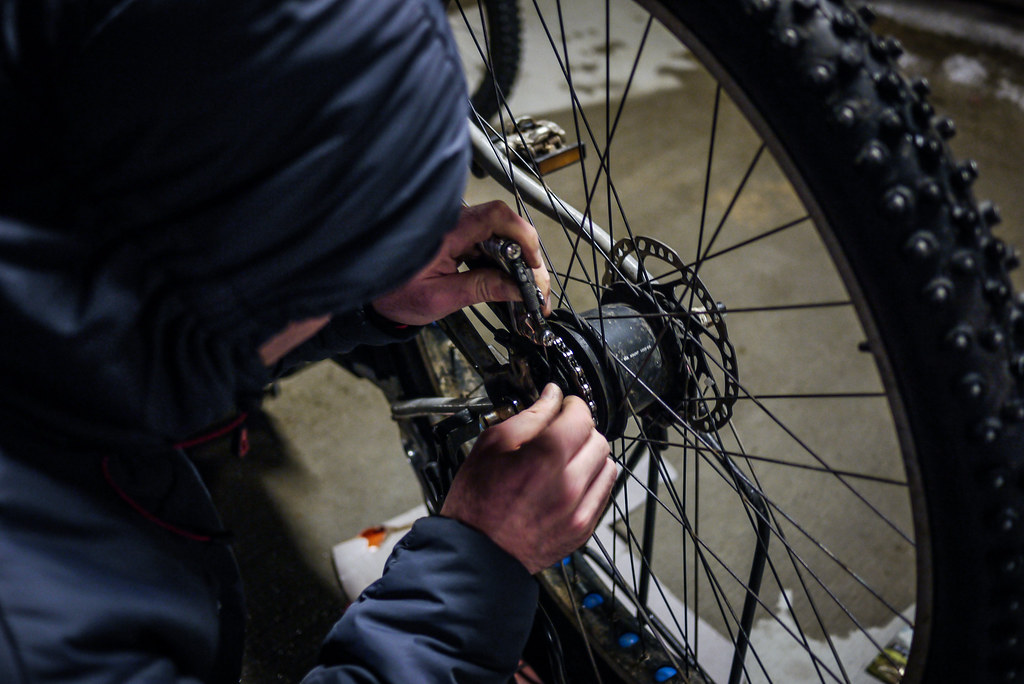
First off is the Shimano Centerlock disk brake rotor. For this, you need a centerlock/cassette tool without the quick-release pin (so it will go over the solid axle of the Alfine hub). The item number on my Shimano tool was TL-FW30.
Once that was off, I was able to access the locknut and cone. Using a 15mm cone spanner and adjustable spanner, I removed the cone.
With these removed, the wheel is flipped over and the drive side bits and bobs removed. This includes the shifting accessories which allow access to a small snap-on plastic cover, which is concealing the snap-ring that holds the cog on. This plastic cover can be pried off by hand very easily.
Next is the snap-ring. A small flat-head screw driver does this job well. Keep your free hand over the snap-ring – when it finally comes loose, it will spring off forcefully.
Once you have the snap-ring and cog off, a metal dustguard and plastic ring needs to be removed. The plastic ring provides access to the knobby ‘grip’ of the main screw-on dust-cap, which holds the guts of the hub in.
Some people have reported being able to screw open the dustcap by hand (it screws open clockwise, which is opposite to normal), but I had to take to it with a screwdriver to loosen it a little. Once the dustcap comes free, the whole hub shell will fall away from the insides.
On my hub, I noticed right away that water had entered the hub at some stage. I do vaguely remember the non-drive side cone being loose at one stage, and suspect that this was the culprit. If the cone is on properly, then the rubber seal should prevent any water from getting in. The rusty residue was not too bad though, and wiped off easily. After cleaning the hub shell, however, there were some visible blemishes on the bearing race, but no noticeable pitting.
To remove the drive-side bearing cage, the hub needs to be split into two pieces. This is achieved by removing the snap-ring at the non-drive side of the unit.
The whole axle unit slides out of the main ring gear unit in two bits (explosion drawing here). There was no visible rust residue inside, so that was reassuring. I cleaned up the drive-side bearing cage, re-greased it, and put the two pieces back together. This is done by lining up the tab on the ring gear unit, and the groove in the axle unit. Even when the tab and groove are lined up, however, the gears need to be rotated around a little to get the ring gear unit to mate to the axle unit (this can take a while to get right).
Everything back together, with snap-ring re-installed, the whole lot gets dunked in auto transmission fluid. Mine was just normal, service station (gas station) ATF, using a 2 litre PET bottle as a dunking container.
I left it in for about 5 minutes, and then let it drain for about 10 minutes while I was re-greasing the insides of the hub casing.
The innards then went back into the hub shell, the various dust covers put back on, the cog and snap-ring (which can be infuriating to get on) and the gear-shifting accessories. And then I took it all to bits again. No joke. I had put the drive-side bearing cage on the wrong way around. The picture above shows it in the correct orientation. That was not a happy moment when I had realised I had put it on wrong…
In all, it took me about 45 minutes plus another 20 minutes to rectify the bearing cage issue. Next time it will take around 30 minutes, I would say. That’ll probably be in another 12-18 months time.
Without the oil bath, the hub just has grease inside it. This means there is quite a lot of friction. For example, when back-pedaling the bike  on a workstand, the back wheel will start to rotate backwards. With the oil bath, however, backpedaling does not affect the back wheel. I didn’t notice any difference in gear changing; that is as smooth as ever.
August 17th, 2012 | categorizilation: all categories,Hokkaido (Japan),Japan,Post-2008
About a month ago (July 31st), four chaps from Surly (the bicycle maker) visited Sapporo. They brought with them the hallowed new bike of theirs, the Krampus. I joined them along with a group from Sam’s Bike on a blat around some hills in Sapporo.
The guy above getting a lot of air on a bicycle with 29+ wheels (700c 50mm wide rims with 3.0 tyres) is Surly engineer Thor. It is nice that the Surly lot are bike nerds at heart.
The route for their visit in Sapporo was along a mountain bike trail which includes riding along a smooth-rock bottomed stream. This was at the Rarumanai Nature Park mountain bike trail near Sapporo (goo.gl/maps/LZQo4).

August 16th, 2012 | categorizilation: all categories,Hokkaido (Japan),Japan,Post-2008,Shiretoko Tour (2012)
It was always going to be a hard decision as to whether I would cycle all the way home to Sapporo in one go today, or split the distance into two days. In the end, I did it in one day. The reason being that it was raining. Cats and dogs almost all day. Even if I ended up arriving in Sapporo late, at least I knew there was a hot shower and comfy bed waiting for me.
Mercifully, the camp manager had allowed me to pitch my tent inside the amenities block, which kept me out of the light rain during the night. When I got up at 4am, the weather was cloudy, but only a very light misty rain.
By the time I was ready to leave at 5am, it was pouring rain. I considered staying one more night at the campground, since the forecast was for good weather tomorrow. But there was not any suitable covered communal areas in the campground to spend the day. So I just went for it, figuring the rain would either pass, or I would pass through it and out the other side if I got going.
By lunchtime I had cycled for about 5 hours, and my fingers looked like prunes. The rain just did not let up.
Lake Katsuragawa was the first I saw of clearer skies.
 All the rivers and lakes in the area were pure dirt brown. Today was not the only day they had seen rain recently.
In the end I followed Route 452 for what felt like en eternity through the rain. Generally bleak scenery and close forest made for some generally uninspiring riding. Although the inner little boy in me delighted in charging through the deepest puddles I could find on the side of the road.
The last 3 hours or so of today’s ride was conducted on pure determination. My legs had no power left in them, and my butt, despite the padded bike shorts and cushy Selle An-Atomica saddle, was getting chaffed and sore. During the last hour of the ride, I was being passed by grannies on their mama-chari.
I got home and promptly had that hot shower. It was bliss.
After the shower, I did a tally of how many bears had been found on the 16-day bear hunt cycle tour in bear-infested Hokkaido. The grand total came to 0. Nada. We did see approximately 3 stuffed bears, 24 bear warning signs, and took part in one bear safety lecture. We could have tried harder, I guess. We could have slept wild wrapped in honey-glazed bacon strips. We could have washed our stinky socks more often (I hear that bears don’t like stinky socks). Perhaps we’ll have better luck next year*.
Route Map
Distance: 151.4km | Time on bike: 9h 04m | Average speed: 16.7km/h | Bears: 0
Financials: Food:Â 1,736yen
* It bears noting that our hiking pals, Leon, Ric, and Matt, did meet a bear up in the wilds of Shiretoko National Park. While from our experience it seems highly unlikely that you’d meet a bear cycle touring in Hokkaido, hiking is a different matter.